From the way we walk to the way we watch the natural world, small tweaks in everyday life are creating ripples of positive change – as this week’s stories reveal.
Butterflies are emerging in big numbers for this year’s Big Butterfly Count in the UK, raising hopes after last year’s dip. Meanwhile, scientists say walking just a bit faster could help older people stay healthier and independent for longer. And in the world of climate innovation, AI is helping researchers develop a super-cooling building material that could cut emissions in hot cities.
Here are three positive stories from the week of July 21 to 27 July, 2025.
Big Butterfly Count takes flight – and early signs are looking hopeful
There’s encouraging news for UK wildlife lovers as the Big Butterfly Count gets underway, and 2025 is already shaping up to be a strong year. Many species have emerged early and in impressive numbers, raising hopes after last year’s low figures.
“Butterflies are a really good indicator of how well other wildlife is doing,” said Simon Saville from Butterfly Conservation, the charity behind the nationwide count. “If you don’t see butterflies then you should be worried – and we should be taking action to improve the natural world.”
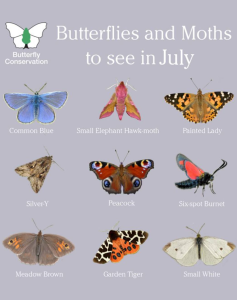 Image credit: Butterfly Conservation (Instagram: @savebuttereflies)
The annual event runs from 18 July to 10 August, inviting the public to spend just 15 minutes counting butterflies and moths in a spot of their choice. The data collected helps scientists track how nature is responding to the changing climate.
Dr Dan Hoare, also from Butterfly Conservation, said it’s one way of responding to the “wild weather rollercoaster” we’re experiencing. “It’s looking really promising,” he added of this year’s count.
And it’s not just butterflies getting the spotlight, moths are also playing a crucial role. “Moths are often underrated but they’re still very important for pollination,” said Fiona Scully, site manager at the charity. “They’re really needed to support other animals.”
If you’re lucky enough to spot some this weekend, join the count and be part of a much-needed boost for Britain’s biodiversity.
How just a few more steps can boost health and independence
Good news for anyone who’s not a massive fan of long walks – you don’t need to hit 10,000 steps a day to see real health benefits. New research published in The Lancet Public Health shows that just 7,000 steps is a realistic and powerful goal, particularly for older adults, and enough to meaningfully lower the risk of chronic diseases like heart conditions, diabetes and even depression.
What’s even more encouraging is that taking those steps just a little faster could make an even bigger difference.
Another study from the University of Chicago Medicine found that increasing your walking pace by just 14 steps per minute (from about 77 to 100) can significantly improve strength, mobility, and independence for older adults at risk of frailty. With frailty linked to slower walking, fatigue and falls, this small change could mean more years of moving freely and living confidently.

AI helps develop ultra-white coating that could cut emissions and energy bills
In a brilliant example of AI for climate innovation, researchers have developed what might be the whitest coating yet – and it could help buildings stay cooler, dramatically reducing energy use in hot climates.
The new coating, developed by engineers from the University of Texas at Austin and international collaborators, works by reflecting heat away from buildings more effectively than traditional materials. It’s the result of an AI-powered process that designed over 1,500 materials, optimised for precise heating and cooling.
When tested on a model building under direct midday sun, the new coating kept the roof up to 20°C cooler than those painted with conventional white or grey paints. That kind of difference could significantly reduce the need for air conditioning, saving up to 15,800 kilowatt hours a year in hot cities like Rio or Bangkok.
Professor Yuebing Zheng, one of the lead researchers, said the machine learning approach allows them to design materials with “superior performance that were previously unimaginable.”
An important reminder of how AI is becoming a key ally in accelerating energy efficiency breakthroughs.
Head to our new YouTube channel, Perspectives, to explore more insights and innovations in the realm of AI, sustainability, healthcare and more.